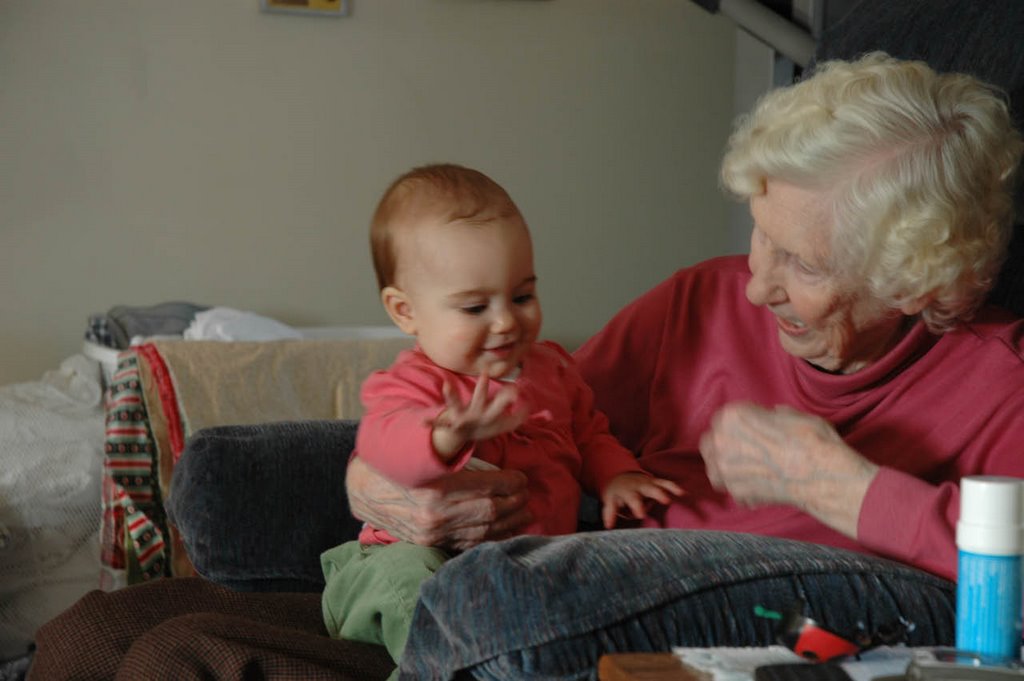
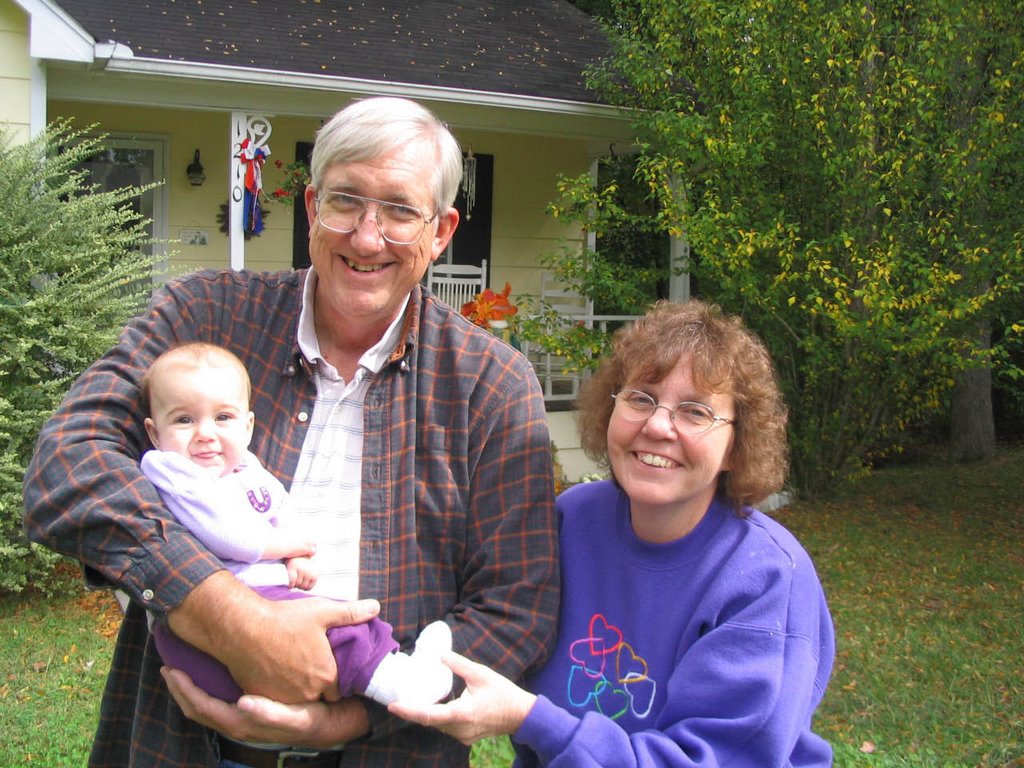
We were able to spend Thanksgiving with Dave's family in Knoxville. We all had a good time visiting everyone. Dave was able to get some fishing in, we were able to go out to dinner minus Hadleigh, and I worked on a sewing project.




The day I received American citizenship was a turning point in my life. I had ceased to be stateless. Until then, unprotected by any government and unwanted by any society, the Jew in me was overcome by a feeling of pride mixed with gratitude.
From that day on, I felt privileged to belong to a country which, for two centuries, has stood as a living symbol of all that is charitable and decent to victims of injustice everywhere—a country in which every person is entitled to dream of happiness, peace and liberty; where those who have are taught to give back.
In America, compassion for the refugee and respect for the other still have biblical connotations.
Grandiloquent words used for public oratory? Even now, as America is in the midst of puzzling uncertainty and understandable introspection because of tragic events in Iraq, these words reflect my personal belief. For I cannot forget another day that remains alive in my memory: April 11, 1945.
That day I encountered the first American soldiers in the Buchenwald concentration camp. I remember them well. Bewildered, disbelieving, they walked around the place, hell on earth, where our destiny had been played out. They looked at us, just liberated, and did not know what to do or say. Survivors snatched from the dark throes of death, we were empty of all hope—too weak, too emaciated to hug them or even speak to them. Like lost children, the American soldiers wept and wept with rage and sadness. And we received their tears as if they were heartrending offerings from a wounded and generous humanity.
Ever since that encounter, I cannot repress my emotion before the flag and the uniform—anything that represents American heroism in battle...
As a great power, America has always seemed concerned with other people’s welfare, especially in Europe. Twice in the 20th century, it saved the “Old World” from dictatorship and tyranny...
America understands that a nation is great not because its economy is flourishing or its army invincible but because its ideals are loftier. Hence America’s desire to help those who have lost their freedom to conquer it again. America’s credo might read as follows: For an individual, as for a nation, to be free is an admirable duty—but to help others become free is even more admirable.
Some skeptics may object: But what about Vietnam? And Cambodia ? And the support some administrations gave to corrupt regimes in Africa or the Middle East? And the occupation of Iraq? Did we go wrong—and if so, where?
And what are we to make of the despicable, abominable “interrogation methods” used on Iraqi prisoners of war by a few soldiers (but even a few are too many) in Iraqi military prisons?
Well, one could say that no nation is composed of saints alone. None is sheltered from mistakes or misdeeds. All have their Cain and Abel. It takes vision and courage to undergo serious soul-searching and to favor moral conscience over political expediency. And America, in extreme situations, is endowed with both. America is always ready to learn from its mishaps. Self-criticism remains its second nature.
...America went to war to liberate a population too long subjected to terror and death.
...One cannot but feel grateful to the young Americans who leave their families, some to lose their lives, in order to bring to Iraq the first rays of hope—without which no people can imagine the happiness of welcoming freedom...



















"A Growing Hunger for Honesty and Authenticity"
Big Religious Term: "Free Will"
The essence of free will is choosing according to our desires. The will is free to choose whatever it desires. With regard to salvation, the question then becomes, what do fallen human beings desire? Jonathan Edwards said that as fallen human beings we retain our "natural freedom" (the power to act according to our desires), but lose our "moral freedom" (the disposition, inclination, and desire of the soul for righteousness). In the Fall, we lost all desire for God. But because we can still choose according to our desires, we choose to sin and are accountable to the judgment of God. In this sense, the freedom of our will is a curse. All human beings desire to flee from God unless and until the Holy Spirit performs a work of regeneration. That regeneration changes our desires so that we will freely repent and be saved.
This understanding of human free will is not deterministic because determinism teaches that our actions are completely controlled by something external to us, making us do what we don't want to do. This is coercion and is opposed to freedom. How can our choices be determined but not coerced? Because they are determined by something within -- by what we are and by what we desire. They are determined by ourselves. This is self-determination, which is the very essence of freedom.